For businesses across the UK, reducing carbon emissions is becoming an increasingly important part of long-term business planning. Whether your company has formal net-zero targets, is working towards better ESG performance or simply wants to reduce its environmental impact, understanding where your emissions come from is an important first step. Speak to us about solar panels for your business in Kent.
For many businesses, electricity is a significant consideration. The electricity your company purchases and uses can contribute to your Scope 2 emissions, making energy consumption an important area to address.
One practical way to reduce reliance on purchased electricity is to generate your own renewable power.
If you are looking for ways to reduce your business’s Scope 2 emissions, solar panels could be a worthwhile investment. At TH Electrical, we provide solar PV and battery storage solutions for businesses, helping commercial customers explore the potential benefits of generating renewable electricity on-site.
Call TH Electrical on 01622 910021 or email info@th-electrical.co.uk to discuss solar panels for your business.
What Are Scope 2 Emissions?
Scope 2 emissions are indirect greenhouse gas emissions associated with purchased or acquired energy consumed by a business.
According to the GHG Protocol, Scope 2 covers emissions from purchased or acquired electricity, steam, heating and cooling.
For many businesses, purchased electricity is likely to be one of the most relevant areas to consider.
Think about everything in your commercial premises that uses electricity. Lighting, computers, machinery, refrigeration, heating and cooling systems, servers and other equipment can all contribute to your overall electricity consumption.
While your business may not directly produce emissions when it switches on a light or operates a piece of equipment, emissions can be associated with the generation of the electricity purchased from the grid.
This is why reducing the amount of grid electricity your business consumes can form part of a wider emissions reduction strategy.
How Can Solar Panels Help Reduce Scope 2 Emissions?
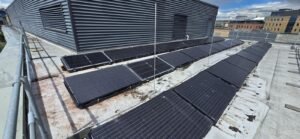
Commercial solar panels allow your business to generate electricity on-site from daylight.
When your solar PV system is producing electricity, your business can use that electricity within the premises. This can reduce the amount of electricity you need to purchase from the grid.
The GHG Protocol specifically recognises on-site, behind-the-meter solar PV as an example of renewable energy generation used by companies.
For a business, this can provide two key benefits:
- Less reliance on purchased grid electricity
- Greater use of renewable electricity generated on-site
Solar panels can therefore be an important consideration for businesses looking to address electricity-related emissions while also looking for opportunities to reduce energy costs.
Solar Panels Can Reduce Your Business Energy Bills
Reducing emissions is not the only reason to consider commercial solar panels.
Energy costs are a significant overhead for many businesses. If your premises use substantial amounts of electricity during daylight hours, solar PV could help reduce the amount of electricity you purchase from your energy supplier.
Instead of purchasing every unit of electricity your business requires, some of your electricity can be generated directly from your own roof or other suitable area.
Commercial solar providers commonly highlight the potential for solar PV to lower energy bills, reduce reliance on the grid and cut carbon emissions.
The financial benefit will depend on your individual circumstances, including your electricity consumption, tariff, solar system size, roof space, shading and operating hours.
This means a professional assessment is important before deciding what type and size of system is right for your business.
Why On-Site Solar Makes Sense for Businesses
Businesses are often ideally positioned to make use of solar energy.
Many commercial properties operate primarily during daylight hours, which is when solar panels are generating electricity.
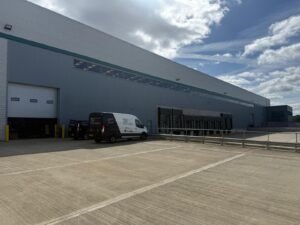
For example, an office may use electricity throughout the working day for computers, lighting, heating, cooling and other equipment. A warehouse may have significant electricity demand from lighting, machinery and handling equipment.
A retail business may use electricity for lighting, refrigeration, tills and other systems.
In these circumstances, there can be a useful overlap between when the solar panels generate electricity and when the business needs it.
The greater the proportion of generated solar electricity that can be used directly on-site, the less electricity may need to be purchased from the grid.
Solar Can Support Your Wider Net-Zero Strategy
Installing solar panels is unlikely to address every source of emissions within a business, but it can be an important part of a broader sustainability strategy.
Businesses can combine solar PV with other measures designed to reduce energy consumption and improve efficiency.
These could include:
- Upgrading to LED lighting
- Improving insulation
- Installing energy-efficient heating and cooling
- Using smart energy monitoring
- Reducing unnecessary electricity consumption
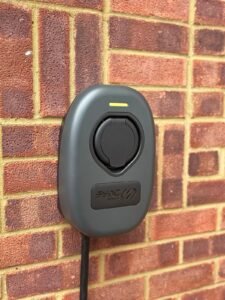
- Installing electric vehicle charging points
- Considering battery storage
- Reviewing energy tariffs and procurement
- Improving building energy management
Taking a whole-business approach can help identify where the greatest opportunities for emissions reductions and energy savings exist.
Solar Panels and ESG
Environmental considerations are increasingly important for businesses.
Customers may want to know how sustainable a company is. Employees may value employers that demonstrate environmental responsibility. Larger organisations may also expect suppliers and contractors to provide information about environmental performance.
Installing commercial solar panels is a tangible investment in renewable energy.
Rather than simply stating that your business wants to become more sustainable, solar PV provides a practical way of generating renewable electricity at your own premises.
It can therefore complement wider environmental policies, sustainability strategies and carbon reduction plans.
However, businesses should ensure that any Scope 2 claims are calculated and reported using the appropriate methodology. The GHG Protocol Scope 2 Guidance includes specific requirements around how companies account for electricity and renewable energy instruments.
What About Solar Panels and Scope 2 Reporting?
Scope 2 accounting can be more complicated than simply looking at your electricity bill.
The GHG Protocol distinguishes between location-based and market-based approaches in markets where relevant contractual information is available.
This means businesses should consider how their renewable electricity generation and electricity purchasing arrangements fit within their particular reporting requirements.
If your business is preparing formal carbon reports, sustainability statements or ESG information, it is sensible to work with the appropriate sustainability or carbon reporting professional alongside your solar installer.
TH Electrical can focus on the electrical and solar installation itself, helping your business put the physical infrastructure in place to generate renewable electricity on-site.
Could Battery Storage Help Too?
Solar panels generate electricity when there is daylight, but your business may not always use all the electricity being generated at the exact moment it is produced.
Battery storage can potentially help businesses make greater use of their solar generation.
Surplus electricity generated by the solar panels can be stored in a suitable battery system and potentially used later when solar generation is lower.
This could be particularly useful for businesses with electricity demand outside normal daylight generation hours.
Whether battery storage is worthwhile will depend on your business’s electricity profile, solar generation and the proposed system design.
For this reason, it is important to look at solar and battery storage as part of the wider energy requirements of your premises rather than choosing equipment based solely on its capacity.
How Much Could Your Business Save?
Every business is different, so there is no single figure that can accurately predict how much a commercial solar installation will save.
Potential savings can depend on:
- Annual electricity consumption
- Current electricity tariff
- Solar panel system size
- Roof orientation
- Available roof space
- Shading
- Business operating hours
- Daytime electricity consumption
- Battery storage
- Electricity exported to the grid
A professional solar assessment can help establish what is achievable at your premises.
For a business with high daytime electricity consumption and a suitable roof, solar PV could be an especially interesting option.
Why Choose TH Electrical?
If your business is considering solar panels as part of its approach to Scope 2 emissions, TH Electrical can help you explore your options.
We provide electrical services, solar PV and battery storage solutions for businesses, helping commercial customers consider renewable energy alongside their wider electrical requirements.
Our aim is to provide a solution that is appropriate for the building and the way your business operates.
Whether you are at the very beginning of your sustainability journey or already have carbon reduction targets in place, discussing your electricity requirements with an experienced electrical contractor can help you understand what solar could offer.
Start Reducing Your Reliance on Grid Electricity
Scope 2 emissions can be an important consideration for businesses looking to reduce their environmental impact.
By generating renewable electricity on-site, solar panels can help businesses reduce their reliance on purchased electricity while potentially lowering energy costs.
For businesses with suitable premises and electricity usage, commercial solar PV can be a practical investment that supports both financial and environmental objectives.
It is not simply about putting solar panels on a roof. The right system should be designed around your electricity consumption, building and long-term requirements.
If you are considering solar panels for your business and want to understand whether they could help with your energy costs and carbon reduction objectives, speak to TH Electrical.
Need Help With Your Scope 2 Emissions?
If you’re looking for a practical way to generate more renewable electricity at your commercial premises, TH Electrical can discuss your requirements and explain the options available.
Call us on 01622 910021
Email us at info@th-electrical.co.uk
Speak to TH Electrical today about solar panels for your business and take the next step towards generating renewable electricity on-site, reducing reliance on the grid and supporting your wider carbon reduction strategy.